
How about China's small turbojet engines
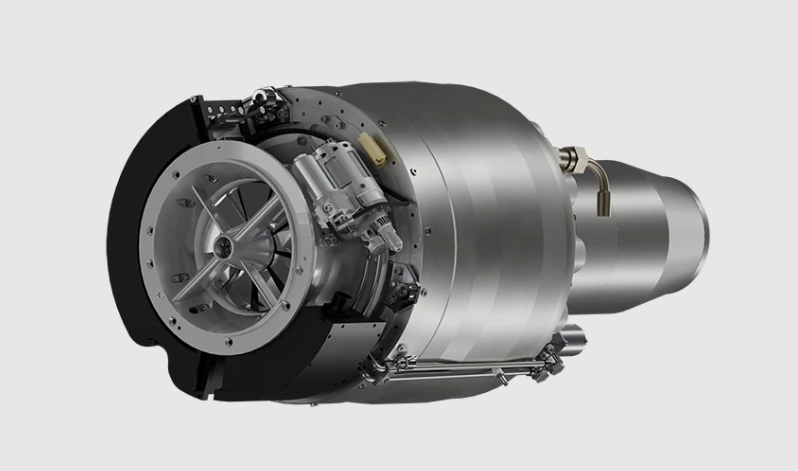
China’s domestically produced 160-kilogram thrust 3D-printed micro turbojet engine has completed single-engine flight tests, achieving significant technological breakthroughs and reaching a domestic leading level, with broad application prospects.
This engine, independently developed by the AECC Hunan Power Machinery Research Institute, is the first 160-kilogram thrust-level 3D-printed minimalist lightweight micro turbojet engine in China to complete flight verification. The core advancements and technological strengths are as follows:
Test verification results: The hang-off flight verification at an altitude of 4,000 meters was completed in July 2025, and the first single-engine flight test was successfully completed in November of the same year. The equipped target drone flew stably for 30 minutes, reaching a flight altitude of 6,000 meters and a flight speed of Mach 0.75. The entire flight condition was normal and stable, verifying its reliability in complex high-altitude environments.
Technological innovation advantage: Over three-quarters of the weight of the entire machine and all rotor components are manufactured using 3D printing, combined with multidisciplinary topology optimization design. Compared to traditional manufacturing, the number of parts is reduced by 80%, the weight of core components is reduced by over 30%, and the research and development cycle is shortened by half. At the same time, use and maintenance are also simpler, achieving the design goal of lightweight and high performance.
Clear application scenarios: This 160-kgf thrust-class engine can provide a new power solution for small aircraft platforms such as loitering munitions, drones, and target drones. The 3D printing manufacturing method can also reduce production costs and improve mass production efficiency, adapting to large-scale deployment needs, and has promising applications in both military and civilian fields.
In addition, there are other mature small turbojet engine products in China: private enterprises have launched multiple models such as BPS TJ150 and MTE-160, which are applied in the fields of precision strike munitions and target drones; when used independently, the core engine of the Jiuzhai turbofan engine can also serve as a 200-kilogram-class single-rotor turbojet engine for cruise missiles. Overall, China’s small turbojet engines have filled the technological gap and formed a product spectrum covering different thrust requirements.